before the letters begin
The Correspondence Appears
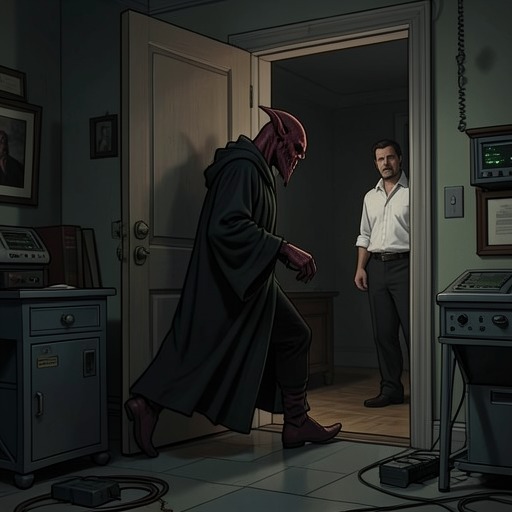
An unnamed editor presents a collection of letters that has fallen into his hands, declining to explain how he obtained them. He warns that devils are real, but that excessive interest in them is as dangerous as disbelief, and refuses to teach readers the script used in the correspondence.
He cautions that [Screwtape](entity:character-recall-character-screwtape-76dc8c3b5a16) is a liar and that his portraits of human beings may be distorted by [Hell](entity:location-recall-location-hell-e163fca35b4f)’s wishful thinking. The chronology of the letters is not reliably terrestrial; the European war matters to Screwtape only when it touches the spiritual life of one person.
at the opening of the correspondence
Argument and Materialism
[Screwtape](entity:character-recall-character-screwtape-76dc8c3b5a16) answers [Wormwood](entity:character-recall-character-wormwood-9946acdfecc1)’s report about guiding [the patient](entity:character-recall-character-0bf73c24849b)’s reading and keeping him near a materialist friend. He says that argument is a poor defense against Christianity because it awakens reason and can turn the struggle toward the Enemy’s ground.
Instead, Wormwood should make materialism seem fashionable, tough, and modern, and keep the patient’s attention fixed on ordinary sensory life. Screwtape recalls diverting an atheist in the [British Museum](entity:location-recall-location-british-museum-79b9ec91e23e) from a dangerous line of thought by making him postpone it for lunch, then treating a bus and a newsboy as proof of “real life.”
early in the correspondence
The Patient Converts
[Wormwood](entity:character-recall-character-wormwood-9946acdfecc1)’s patient becomes a Christian, a reversal that enrages [Screwtape](entity:character-recall-character-screwtape-76dc8c3b5a16) but does not make him give up. Screwtape points out that [the patient](entity:character-recall-character-0bf73c24849b)’s familiar mental and bodily habits remain available to the tempters, and that adult converts have often been drawn back into [Hell](entity:location-recall-location-hell-e163fca35b4f)’s camp.
He identifies the visible, imperfect congregation as an opportunity: the patient may confuse awkward neighbors, shabby books, or a makeshift church building with the reality of the Church itself. Screwtape advises Wormwood to exploit the anticlimax of early religious practice, when emotional enthusiasm gives way to ordinary effort.
during the patient's first weeks as a Christian
Disappointment at Church
[Screwtape](entity:character-recall-character-screwtape-76dc8c3b5a16) expects [the patient](entity:character-recall-character-0bf73c24849b)’s first churchgoing experiences to disappoint him. The congregation may not resemble his imagined picture of Christians, and small irritations among the people in the next pew can make their faith seem ridiculous.
The danger is not simply that the neighbors are imperfect; it is that the patient may judge them by standards he has not yet applied to himself. Screwtape urges [Wormwood](entity:character-recall-character-wormwood-9946acdfecc1) to preserve the patient’s pride and keep him from recognizing that his own conversion is no reason to look down on others.
soon after the patient's conversion
Domestic Annoyance
[Screwtape](entity:character-recall-character-screwtape-76dc8c3b5a16) tells [Wormwood](entity:character-recall-character-wormwood-9946acdfecc1) to work with Glubose, the tempter assigned to [the patient's mother](entity:character-recall-character-a9c788bad6f1), to intensify the small frictions of living together. He recommends keeping [the patient](entity:character-recall-character-0bf73c24849b) absorbed in inward spiritual states while he neglects obvious acts of kindness, such as attending to his mother’s physical discomfort.
He also advises turning prayer for her soul into attention to the faults and irritations she seems to embody. At home, each should interpret the other’s words by tone and suspicion while treating one’s own words as harmless; this double standard lets both leave quarrels feeling nearly innocent.
after the first domestic tensions
Prayer Turned Inward
[Screwtape](entity:character-recall-character-screwtape-76dc8c3b5a16) rebukes [Wormwood](entity:character-recall-character-wormwood-9946acdfecc1) for mishandling [the patient](entity:character-recall-character-0bf73c24849b)’s prayers for his mother, then explains how prayer can be diverted from its purpose. A beginner may be coaxed into chasing a vague devotional mood rather than addressing [God](entity:character-recall-character-833766c1de3f) with will and intelligence, or judging prayer by whether it produces the desired feeling.
Screwtape’s subtler strategy is to keep the patient focused on his own mental images of God instead of the real presence he cannot comprehend. If the patient recognizes that his image is merely subjective and directs his prayer beyond it, Screwtape fears that the encounter could become spiritually decisive.
after the patient becomes a Christian
War Begins
The outbreak of [World War II](entity:time-recall-time-c7bd852e004a) fills [the patient](entity:character-recall-character-0bf73c24849b) with anxiety, and [Wormwood](entity:character-recall-character-wormwood-9946acdfecc1) responds with excitement at the prospect of human suffering. [Screwtape](entity:character-recall-character-screwtape-76dc8c3b5a16) scolds him for enjoying fear as a spectacle instead of concentrating on whether the war can be used to win the patient’s soul.
War may encourage cruelty and lust, but it can also turn people toward [God](entity:character-recall-character-833766c1de3f), sacrifice, and causes beyond themselves. Screwtape warns that danger and death make complacent worldliness harder to maintain, and that suffering does not necessarily destroy a faith that has already learned to expect hardship.
during the early uncertainty of the war
Anxiety About Conscription
Because [the patient](entity:character-recall-character-0bf73c24849b) may be called up for military service, [Screwtape](entity:character-recall-character-screwtape-76dc8c3b5a16) wants him trapped in suspense. [Wormwood](entity:character-recall-character-wormwood-9946acdfecc1) should make him rehearse many incompatible futures instead of accepting the fear and uncertainty that are actually present.
Screwtape distinguishes resignation to present hardship from trying to submit in advance to imagined disasters. He also advises directing the patient’s malice toward nearby people he knows while sending his benevolence toward distant, abstract groups, so that kindness remains imaginary and resentment becomes habitual.
during the patient's early Christian life
Hidden Demons
[Wormwood](entity:character-recall-character-wormwood-9946acdfecc1) asks whether [the patient](entity:character-recall-character-0bf73c24849b) should know that devils exist. [Screwtape](entity:character-recall-character-screwtape-76dc8c3b5a16) explains that [Hell](entity:location-recall-location-hell-e163fca35b4f)’s current policy is concealment: disbelief prevents devils from using direct terror, while belief risks turning people away from materialism.
He recommends exploiting the comic image of a devil in red tights to make the patient dismiss the possibility of real spiritual tempters. Screwtape also says that either extreme patriotism or extreme pacifism can be useful if it makes political identity more important than prayer, worship, and charity.
after the patient's first religious fervor fades
The Emotional Trough
When [Wormwood](entity:character-recall-character-wormwood-9946acdfecc1) assumes that [the patient](entity:character-recall-character-0bf73c24849b)’s religious interest is dying, [Screwtape](entity:character-recall-character-screwtape-76dc8c3b5a16) explains the [Law of Undulation](entity:rule-recall-rule-law-of-undulation-e07d038a0059). Human beings move between emotional and bodily peaks and troughs, and a period of spiritual dryness is not, by itself, evidence of spiritual failure.
Screwtape says that [God](entity:character-recall-character-833766c1de3f) may use the trough to cultivate a freely chosen obedience that persists without emotional reward. The tempters should exploit it, but they must not mistake the loss of pleasant religious feelings for a victory already won.
during the patient's spiritual dryness
Temptations in the Trough
[Screwtape](entity:character-recall-character-screwtape-76dc8c3b5a16) advises [Wormwood](entity:character-recall-character-wormwood-9946acdfecc1) that periods of spiritual dryness make sensual temptations more effective. A tired, emotionally empty person may be more vulnerable to lust or drinking as an anesthetic than a cheerful person is to ordinary pleasure.
He also recommends persuading [the patient](entity:character-recall-character-0bf73c24849b) that the trough will last forever, then steering him either toward despair or toward complacency. Calling the patient’s faith a passing “phase” can make him confuse fading interest with evidence that Christianity is false.
as the patient's faith becomes less fervent
Worldly Acquaintances
The patient makes the acquaintance of a wealthy, fashionable, and sceptical married couple, then begins moving among their friends. [Screwtape](entity:character-recall-character-screwtape-76dc8c3b5a16) praises [Wormwood](entity:character-recall-character-wormwood-9946acdfecc1) for appealing to [the patient](entity:character-recall-character-0bf73c24849b)’s vanity and encourages him to deepen the patient’s unspoken identification with their social circle.
Rather than openly rejecting his faith, the patient postpones acknowledging the conflict between Christianity and the group’s assumptions. That delay puts him in a false position: he laughs and behaves as if he shares attitudes that are not really his, risking a gradual change into the person he is pretending to be.
after the patient joins the new social set
The Two Circles
[Screwtape](entity:character-recall-character-screwtape-76dc8c3b5a16) lays out ways to make [the patient](entity:character-recall-character-0bf73c24849b) live a divided life among his Christian neighbors and his fashionable acquaintances. If he recognizes the difference, he may take vanity in being two different people in two different settings; if he does not, he may excuse continued association by claiming that his presence is doing the others good.
The new life also encourages overspending, neglect of work, and increasing strain with his mother. Screwtape’s goal is not one dramatic act of betrayal but a comfortable habit of evasion.
during the patient's worldly socializing
Laughter as Cover
[Screwtape](entity:character-recall-character-screwtape-76dc8c3b5a16) warns [Wormwood](entity:character-recall-character-wormwood-9946acdfecc1) not to treat all laughter as useful. Joy and play can encourage courage, affection, and contentment, while jokes become dangerous when they excuse selfishness, cowardice, or cruelty.
The most useful form is flippancy: a reflex that treats every serious subject as already ridiculous. It dulls the mind without producing the warmth of genuine joy, giving [the patient](entity:character-recall-character-0bf73c24849b) a steady defense against taking moral or religious questions seriously.
after several weeks of worldly distraction
The Gradual Drift
[Screwtape](entity:character-recall-character-screwtape-76dc8c3b5a16) is pleased that [the patient](entity:character-recall-character-0bf73c24849b) still attends church, because outward habits can conceal how far his inward life has changed. The patient feels vaguely uneasy but avoids thinking about the source of his discomfort, allowing guilt to make prayer and religious duty unwelcome.
This condition lets [Wormwood](entity:character-recall-character-wormwood-9946acdfecc1) replace deliberate pleasures with mere distraction: idle conversations, wasted hours, and aimless staring. Screwtape stresses that small, repeated losses can separate a person from [God](entity:character-recall-character-833766c1de3f) as effectively as spectacular wrongdoing; the gradual road is safest because it attracts little notice.
after the patient's worldly drift
Renewed Repentance
The patient began to simply enjoy a book and walked alone to the old mill. Those simple and genuine joys helped him regain his self. Scrutapu was deeply alarmed by these experiences, as they stripped away the false values created by vanity, busyness, and fashionable entertainments; it was
after the patient's renewal
Humility Under Attack
Scrutatum noted that [the patient](entity:character-recall-character-0bf73c24849b) no longer boasted of maintaining virtue forever, but relied on grace to deal with current temptations. He warned Kōmu to let the patient feel proud of his humility, and then proud of his effort to suppress that pride. He also explained that humility does not mean
during a lull in the war
The Present and the Future
War has temporarily subsided, and [the patient](entity:character-recall-character-0bf73c24849b)'s anxiety has eased. Scrutapu thought, fear or confidence is more useful for them. He said, [God](entity:character-recall-character-833766c1de3f) would direct human attention to eternity or to the present — in the present, people can make practical choices and fulfill their duties
after the patient settles into one parish
Church Shopping Proposed
Scrutatum found that [the patient](entity:character-recall-character-0bf73c24849b), though reserved, remained in the same parish church. Therefore, he urged Tum to persuade him to choose suitable churches elsewhere. The parish gathered people of varied tastes and backgrounds, while self-chosen churches might become clubs or factions
during the patient's continued life at home
The Mother's Food Obsession
Scrutatum describes the mother of [the patient](entity:character-recall-character-0bf73c24849b) as being enslaved by a refined and meticulous greed: she required very little food, which had to be prepared precisely according to an elusive standard, yet she considered herself to be in control by eating less. Her constant dissatisfaction repeatedly annoyed the servants and friends. He
as Screwtape considers the patient's romantic prospects
Love and Marriage Recast
Scrutatum explained that hell tries to make people believe that the passion of love is the only respectable basis of marriage, and that once the passion fades, marriage loses its meaning. He said that this concept turns fleeting feelings into faithfulness, shared responsibility, and a substitute for being one. He outlined
after the patient begins seeking marriage prospects
The Patient Falls in Love
A patient fell in love with a Christian woman, and it had never been reported before. Skruptap, upon learning that she came from a Christian family where members loved each other and had a harmonious family life, was furious; in his view, such a family was both puzzling and rep
after Screwtape learns of the courtship
The Infernal Venus
Scrutapu told the Insect Wood that popular culture can distort people's tastes regarding sex, directing desire towards artificial, transient, or hostile ideals towards lasting relationships. He distinguished two kinds of desire: one that can naturally coexist with respect and marriage, and another that seeks to possess or degrade
during the patient's courtship
Peevishness and Time
Scrutatum encourages the worm to use [the patient](entity:character-recall-character-0bf73c24849b)'s anger: unexpected demands interrupt what he believes to be his own time. It is necessary to lure the patient to view the day as private property, and to see work and religious duties as deductions from personal rights
as the patient enters his lover's social world
The Christian Circle
Through the lover of [the patient](entity:character-recall-character-0bf73c24849b), the patient met more Christians and began to come into contact with a faith more serious and attractive than previously known. Scrutapu suggested that the patient should be corrupted by this influence, leading the patient to feel pride in this circle and look down upon those outside
after the patient joins his lover's Christian circle
Christianity And
Scrutatum believed that the simple Christian faith of this circle was threatening, so he suggested adding a fashionable enterprise or novel idea to the faith. He called this strategy "Christian plus something": making religion an accessory to another plan, identity, or trend, thereby increasing its appeal
during the courtship
Courtship and False Selflessness
Scrutatum believes that romantic relationships are an opportunity to plant seeds of family resentment; after the romantic infatuation fades, these resentments may still grow. He suggests using the term "selflessness" to teach the couple to value the appearance of sacrifice rather than the happiness of the other. A
during the courtship and wartime uncertainty
Doubts About Petitionary Prayer
Patients' yearning for love and worldly happiness grows stronger, and thus they pray more fervently for the war to end and seek help with their practical needs. Skruptap wishes that the wormwood would make him doubt whether his spiritual life is inferior, or whether his prayers are entirely useless
as air raids approach the patient's town
The War Reaches the Patient
Scrutap knew that a fierce air attack was about to come and insisted that [the patient](entity:character-recall-character-0bf73c24849b) must survive. The patient had already left those worldly acquaintances and fallen in love with a Christian woman, and was more actively involved in defense work and neighborhood life
immediately before the air raids
Preparing for the Bombardment
The bombing is certain. Scrutapu thinks that the worm should incite [the patient](entity:character-recall-character-0bf73c24849b) to be timid, take pride in bravery, or hate the Germans. He warns that hell cannot produce the virtue of courage; if the patient fails to muster courage, he may instead repent and recognize himself. The
during the first air raid on the patient's town
The First Air Raid
When [the patient](entity:character-recall-character-0bf73c24849b) experienced the first air raid, he felt fear and thought he was a coward, yet he fulfilled all the requirements of his duty, perhaps even more. His performance frustrated Konomi's plan, preventing fear from making him lose courage
after the first air raid
Fatigue and False Hope
Scrutatum suggested that [the patient](entity:character-recall-character-0bf73c24849b) should use fatigue to make the patient believe that the danger will soon end. Unexpected demands may turn fatigue into a sense of resentment, but complete exhaustion may instead bring about a sense of calm and peace
near the end of the story
The Patient Dies in the Bombing
Before Skruptap could take advantage of the long, ordinary years that Skruptap had hoped for, [the patient](entity:character-recall-character-0bf73c24849b) died in the bombing. Skruptap understood that the patient's death ended the opportunity for the tempter, although the air raids seemed to have provided a chance that filled him with fear
at the instant of the patient's death
The Patient Enters Heaven
The patient recognized those spiritual beings who had accompanied him all his life, understanding that even when he thought he was alone, they had been with him all along. After recognizing him, he was almost immediately welcomed by them
immediately after the patient's arrival in Heaven
Screwtape Threatens Wormwood
Scrutap was furious when [the patient](entity:character-recall-character-0bf73c24849b) was taken away by the wormwood. He described the patient's arrival as the sudden end of his world of fear and pain. He understood that the patient's doubts before reality had collapsed; in life, he had only slightly understood this reality